
Technical SEO
Full crawl audit, metadata overhaul, internal link restructure, and canonicalisation across the category and product hierarchy. Crawl budget prioritised toward revenue-generating pages.
A home and garden furniture retailer with strong products but thin organic visibility outside branded searches. We rebuilt the technical foundation, restructured category pages around commercial intent, and turned organic search into the single largest contributor to revenue.

The retailer had a clear product range and a loyal customer base, but organic visibility was almost entirely confined to brand name searches. The category terms buyers use before they know a brand, searches like "garden dining sets," "outdoor furniture UK," and "rattan corner sofa", were owned by larger competitors and aggregators.
A technical audit confirmed what the Search Console data suggested. Crawl coverage was inconsistent across the category hierarchy, metadata was thin or duplicated on product pages, and internal linking did not reflect the commercial weight of the most valuable categories. The site was generating paid traffic efficiently enough, but organic was contributing well below its potential, and every month of inaction compounded the gap.


Technical foundations before content at scale. A crawl-first approach identified the pages leaking authority, the category URLs with conflicting signals, and the product pages where thin content was suppressing rankings for terms with clear commercial intent. Those were fixed in order of impact before any new content was commissioned.
Category architecture was restructured around search demand rather than internal taxonomy. Each top-level category was mapped to a cluster of supporting terms, subcategory pages, buying guides, and comparison content, so the site could compete for awareness-stage queries as well as high-intent product searches. Every piece of work was tracked against organic sessions, category rankings, and conversion from organic, not just position changes.
The approach combined a focused SEO and content strategy to build authority across the full buyer journey.
Full crawl audit, metadata overhaul, internal link restructure, and canonicalisation across the category and product hierarchy. Crawl budget prioritised toward revenue-generating pages.
Category pages rewritten around primary and secondary commercial terms, with structured on-page content, FAQs, and internal links that reinforced topical authority and improved click-through from search.
Buying guides and comparison content targeting the searches buyers make before they reach a category page. Built to capture early-funnel organic traffic and funnel it toward conversion.
Organic performance tracked by category, keyword cluster, and conversion, not just aggregate sessions. Monthly reporting connected ranking movement to revenue contribution so effort stayed focused on what was moving the needle.

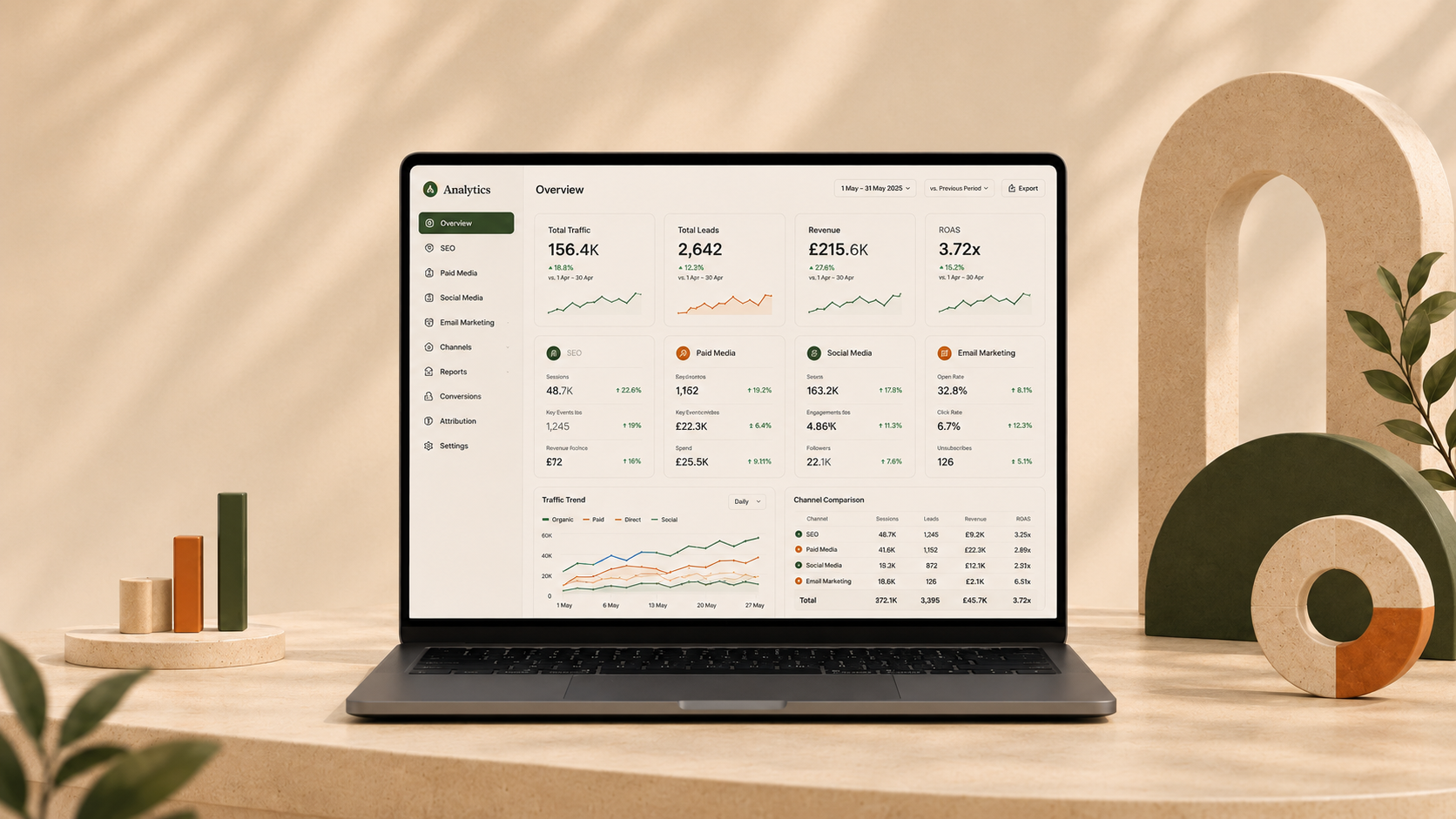
Organic search moved from a secondary channel to the primary revenue driver. The traffic growth was consistent across all key category terms, and the conversion rate from organic sessions held as volume scaled, a sign that the content and architecture were attracting the right buyers, not just more visitors.
Organic traffic growth across priority category and product terms, sustained over the campaign period.
Share of total revenue attributed to organic search, making it the single largest revenue channel by the end of the engagement.
Total revenue growth across the business over the same period, with organic as the primary driver of new customer acquisition.
Get the foundations right and the content does the work for years.Green Hive Digital, on what made the difference here
If organic search is underperforming or you want to reduce reliance on paid, let's talk about what the right SEO strategy looks like for your business.